
Most traders don’t lose money because they can’t find trends.
They lose money because they try to catch reversals too early.
You’ve seen it happen. Price runs hard in one direction, looks stretched, and you step in thinking you’re getting the top or bottom. Then the market pushes one more leg, takes your stop, and only after that starts to reverse.
That’s not terrible luck. That is not how reversals really happen.
A reversal doesn’t happen all at once on the chart. It happens in steps, one after the other. When you get it, your entry get calmer, your losses go smaller, and your timing gets better.
This approach is based on real trading experience and how the market works, not definitions from books.
What the Data Actually Says About Reversals
Patterns and indicators are what most traders use. Positioning and liquidity are what move the market.
The Bank for International Settlements has always shown that institutional flows are the most important thing in the FX market. That indicates that reversals are usually caused by big players entering or leaving positions, not by retail indicators changing signals.
Data from CME Group also shows that momentum tends to persist longer than traders expect, especially during high-liquidity sessions. This is why early reversal attempts usually fail.
Barclays FX research has highlighted that many intraday reversals cluster around key liquidity windows, particularly during session opens and macro releases.
What this means in practical terms is simple. Reversals are not about price being overbought or oversold. They are about where traders are trapped and where liquidity is sitting.
The Real Structure of an Intraday Reversal
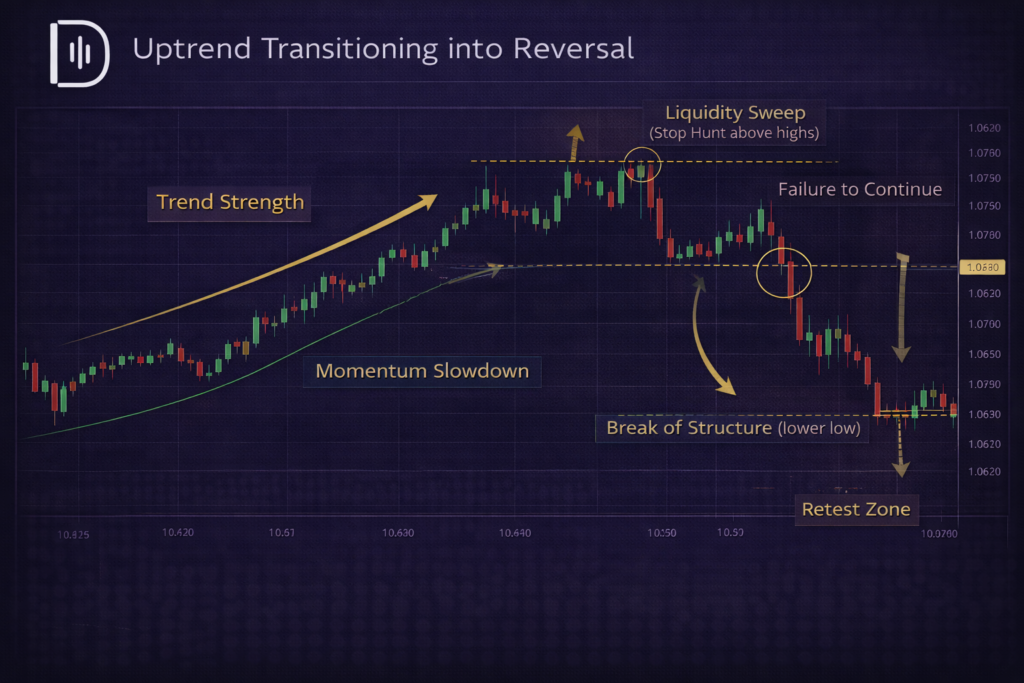
If you take away the indications and noise, reversals happen in a steady pattern.
The price initially shows indications of getting tired. The action slows down, the candles lose power, and the momentum stops growing like it did before.
Then comes the liquidity grab. The market goes past clear highs or lows, which causes stops and breakout entries.
After that, the price stops going up.This is where most traders hesitate, but it is also where the story begins to change.
The key moment is the break in structure. When the market stops making higher highs and instead breaks a previous higher low, or vice versa, something fundamental has shifted.
Finally, price often comes back to retest the broken level before moving in the new direction.
If you try to trade before the failure and structure break, you are predicting. If you wait for confirmation, you are trading with evidence.
A Practical Way to Read Reversals in Real Time
When you are watching a chart live, the first thing to look for is not how far price has moved, but how it is moving now compared to before.
Strong trends tend to print clean candles with continuation. When that changes, when candles start overlapping, when wicks appear against the direction, or when pushes fail to extend, something is shifting.
At this stage, you are not entering. You are observing.
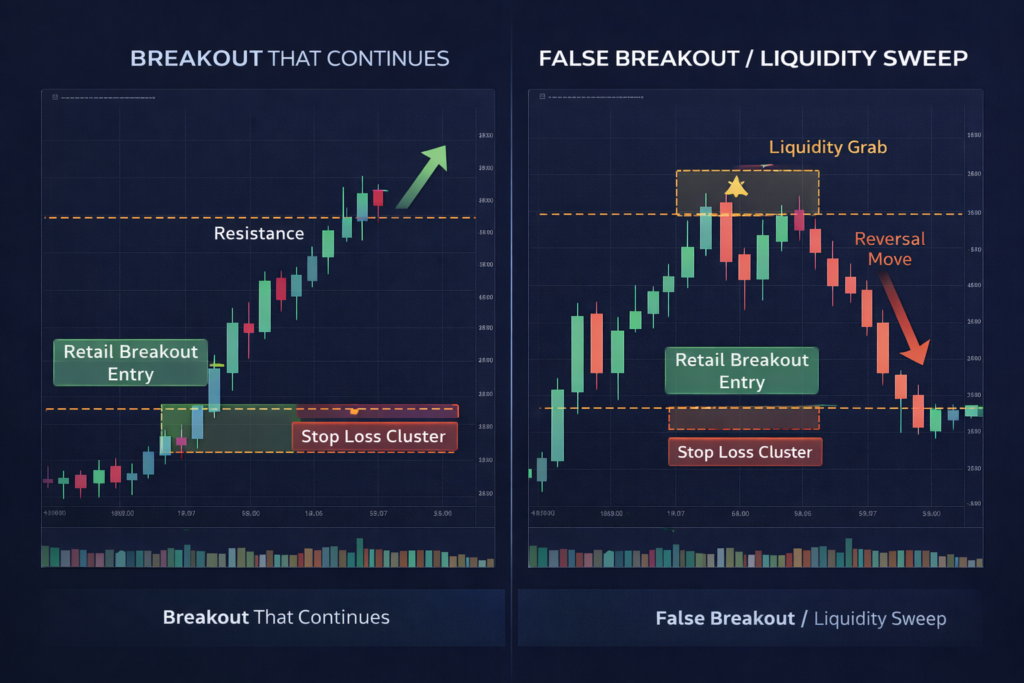
The next phase is where most retail traders get caught. The market will often take out recent highs or lows, creating the illusion of continuation. In reality, this move is often designed to trigger stops and pull in breakout traders.
When that move gets rejected quickly, it tells you liquidity has been taken.
Still, this is not your entry.
The real shift happens when price breaks structure. If the market was trending up and then breaks a key higher low, you now have confirmation that the trend is weakening.
This is where your mindset should change from reacting to anticipating.
Instead of chasing the move, you wait for price to come back. That retest is where the trade becomes clean. Your stop can be placed logically, and your risk is defined.
This approach removes emotion from execution.
Why Timing Matters More Than the Setup
A reversal setup can seem great but yet not work if it happens at the wrong time of day.
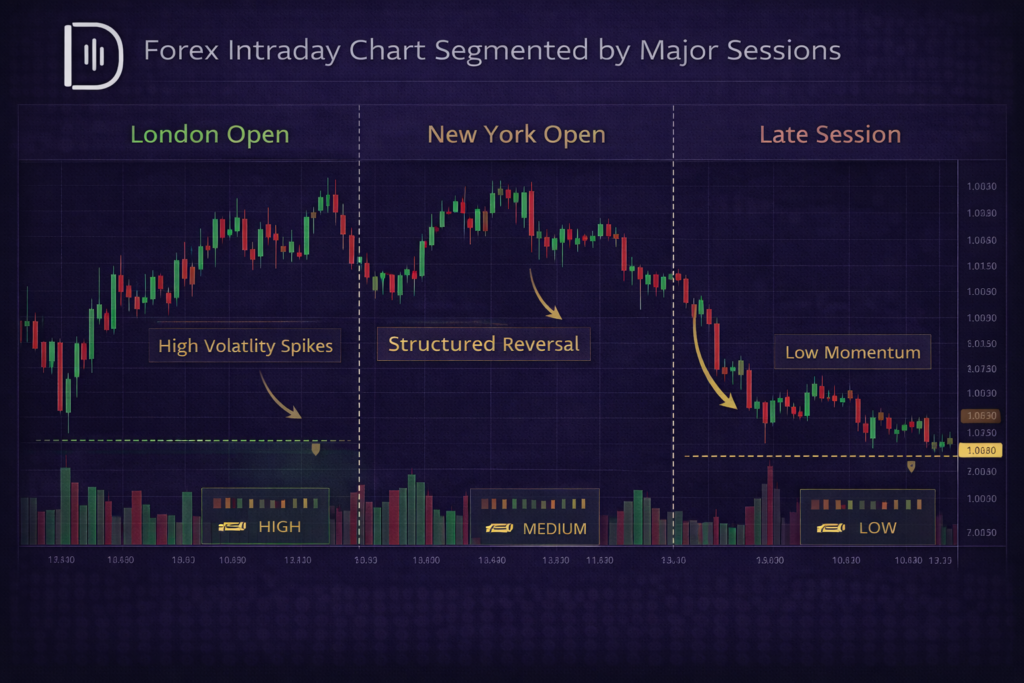
When the London market opens, spikes in liquidity cause rapid swings that often trick people into thinking there would be an early reversal. Price can go in either direction before making a choice.
Reversals during the New York open are often more important since they are often linked to economic news or changes in the way institutions are positioned.
Late in the trading day, reversals can happen, but they lack follow-through. The market simply runs out of participation.
If you have already studied session-based strategies like trading the London session or New York session, you will notice that the same pattern behaves very differently depending on timing.
This is one of the biggest gaps in most traders’ understanding.
When Reversals Fail and Why It Matters
Not every reversal that seems clean is worth trading.
If the trend on a higher time frame is strong, intraday reversals are usually small. You might see a pullback, but not a major shift.
When there are big news developments, structural breaks can be deceiving since price movement changes quickly.
The key insight here is that your edge is not in spotting reversals. It is in filtering them.
Risk and Execution: The Real Make or Break Factor
Even if you read the market correctly, poor execution will erase your edge.
Most traders enter too early, size too large, and place stops based on emotion rather than structure.
Reversal trading requires patience. You are often entering after the move has already started, which can feel uncomfortable. That discomfort leads to mistakes.
This is where most traders miscalculate risk.
A position size calculator takes the guesswork out of the equation and makes sure that things stay the same. It makes sure that your account stays consistent even if your win rate changes.
Reversal trades usually have a better risk-to-reward ratio than trend trades, but they also fail more often. That imbalance works against you if you don’t size it well.
Journaling: Turning Experience Into an Edge
You need more than just screen time to get better at reversal trading. You need feedback that is organised.
Start asking better questions instead than merely writing down how much money you made or lost.
Was there a liquidity sweep before the entry?
Did the market obviously transgress the rules?
What time of day was the trade made?
Was the higher timescale working with you or against you?
When you track these details consistently, patterns start to emerge.
This is where a Trade Journal Template becomes valuable. It turns random outcomes into measurable data.
Over time, you will see which types of reversals you execute well and which ones you should avoid.
Scaling Beyond Small Capital
Even with a solid reversal strategy, growth becomes limited if your capital is small.
That’s why a lot of traders who trade consistently eventually look into prop firm models.
Firms like The5ers, FTMO, and E8 Funding provide you access to more money while also making sure you follow strict risk criteria. This atmosphere inherently rewards traders who follow the rules.
This structure is especially good for reversal trading because it takes time and careful execution.
If your journaling demonstrates a consistent edge, the next step might be to use a The5ers evaluation account. It’s not a shortcut; it’s a method to make something that already works bigger.
FAQs
How do I know if a reversal is real or fake?
A true reversal usually starts with a liquidity sweep and then a visible breach in structure. A pullback is often just that without both.
What is the best indicator for reversal trading?
Indicators can help you make decisions, but price action and structure are more dependable. Indicators by themselves often cause people to enter too soon.
Are reversal trades better than trend trades?
They are different. Reversals can offer higher reward, but they typically come with lower win rates.
Can beginners trade reversals?
They can, but it is usually better to first master trend continuation before attempting reversals.
Closing: One Simple Adjustment That Changes Everything
Most traders focus on being early.
Profitable traders focus on being right.
If you take one thing from this, let it be this. Stop trying to predict reversals. Start waiting for confirmation.
For your next 20 trades, only take setups where you see both a liquidity sweep and a clear break in structure.
Track the outcome.
You will start to notice something shift. Not just in your results, but in how you see the market.
As a next step, revisit your approach to scalp setups in forex or trend continuation strategies so you are not relying only on reversals to make progress.