
Most traders switch from MT4 to MT5 in the hopes of getting greater outcomes.
They gain additional data, tools, and indicators.
And then something weird happens.
Their business grows worse.
Not because MT5 is tougher, but because discipline doesn’t keep up with complexity.
They think too much, trade too much, and make execution too hard.
The platform did not let them down. They failed to adapt their process.
This guide is built from real trading experience, not feature lists. If you want an edge using MetaTrader 5, you need to think differently about how you use it.
What Research Tells Us About Execution and Data Overload
The biggest advantage of MT5 is access to more data, including depth of market and improved order handling.
But studies suggest that having more information doesn’t always help you make better choices.
The Bank for International Settlements says that for short-term traders, changes in market microstructure and liquidity are more important than the amount of raw data.
CME Group cites studies that show that knowing when to execute an order and being aware of order flow are important for intraday performance. Educational breakdowns from Investopedia consistently show that traders who simplify decision inputs outperform those overwhelmed by indicators.
For MT5 users, the takeaway is clear.
Your edge is not in using more tools.
It is in filtering the right information and executing faster.
The Real Advantage of MT5 That Most Traders Ignore
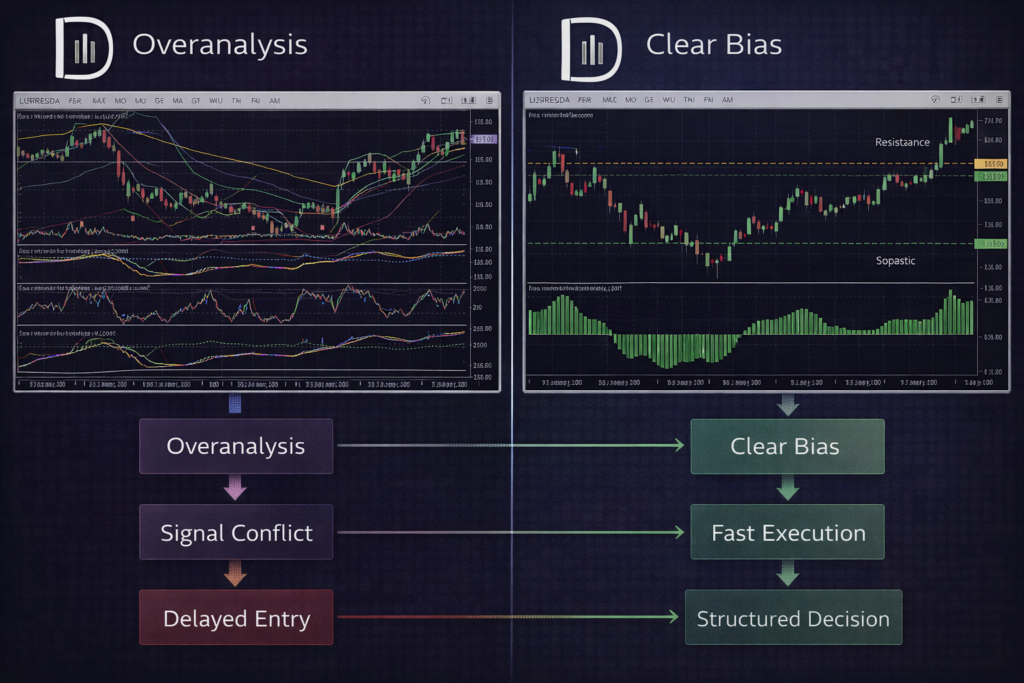
Most traders focus on indicators.
Professionals focus on execution structure.
MT5 improves three things that matter for day traders.
Order management, market depth visibility, and multi asset flexibility.
The mistake is trying to use all of them at once.
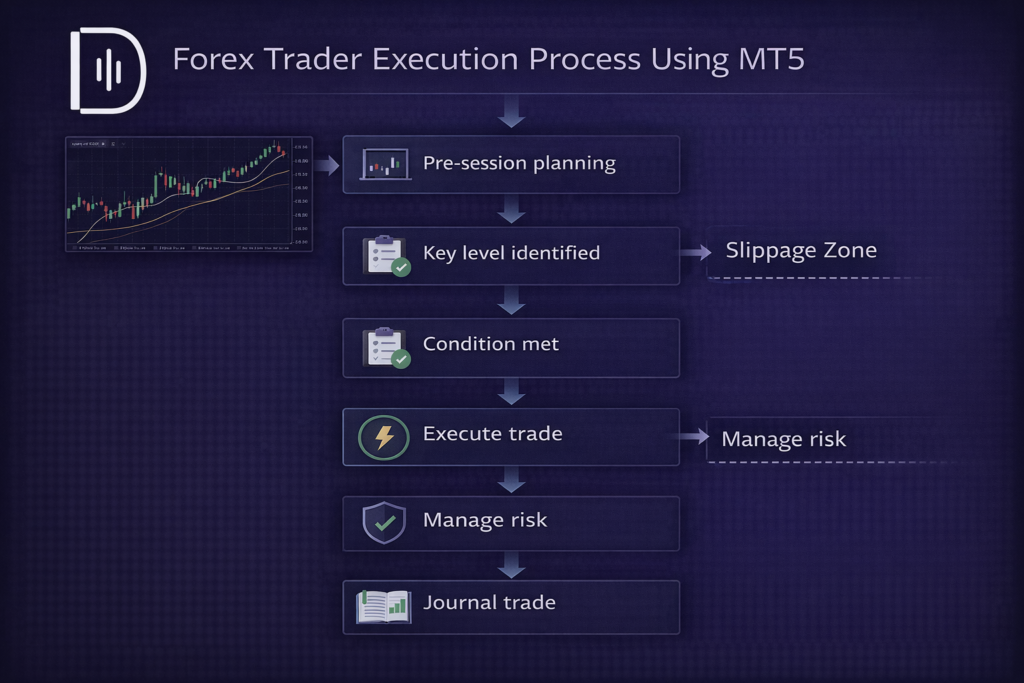
Instead, build a structured workflow.
Treat MT5 as a decision engine, not a feature playground.
A Practical MT5 Workflow for Forex Day Trading
Minimalism is a good place to start with charts.
You can add numerous indicators, timeframes, and items on top of each other with MT5. That doesn’t mean you should.
There should be one question on your chart.
Should I go in, go out, or wait? If your chart cannot answer that quickly, it is too complex.
Many traders benefit from revisiting the DayTradersDiary.com guide on candlestick patterns for day trading because it reinforces how price alone often provides clearer signals than stacked indicators.
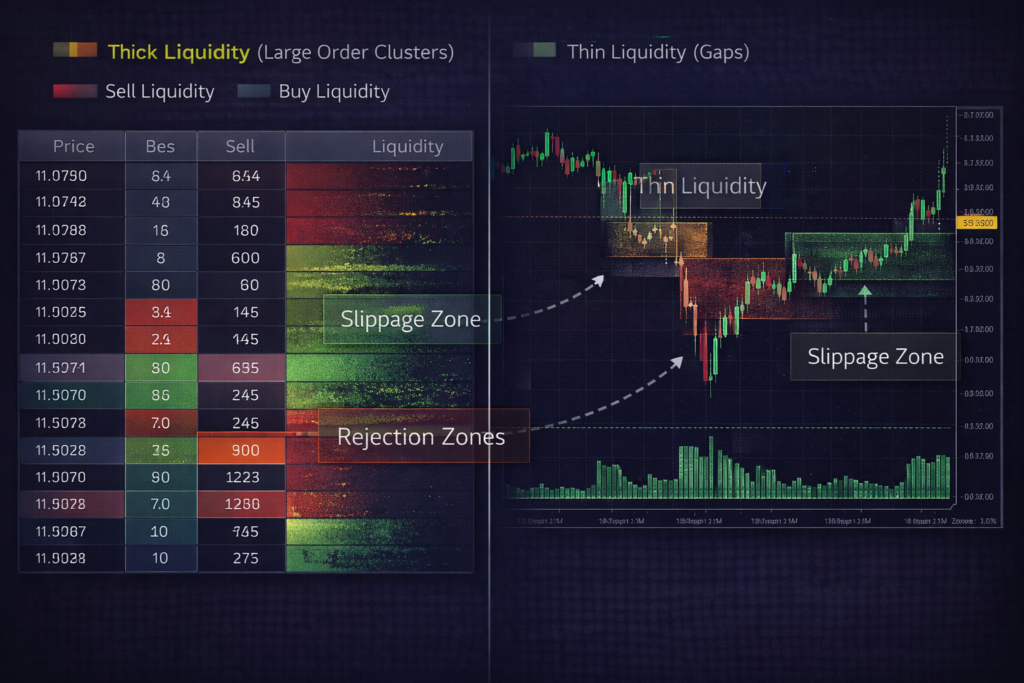
Next is market depth awareness.
Depth of Market on MT5 can show liquidity levels, but it is often misunderstood.
It is not a prediction tool.
It is a context tool.
If you see thin liquidity near your entry, expect faster moves and potential slippage.
If liquidity is thick, expect slower movement and potential rejection zones.
Then comes execution speed.
Use one click trading and predefined trade sizes.
You should not be calculating lot size while the market is moving.
Execution decisions should already be made before you click.
Finally, use profiles.
MT5 allows multiple workspace profiles.
Create separate profiles for London session, New York session, and higher timeframe analysis.
This keeps your focus aligned with the session you are trading.
When Indicators Help and When They Hurt
MT5 gives access to hundreds of indicators.
This is where most traders lose discipline.
Indicators should confirm decisions, not create them.
For example, using MACD or RSI as confirmation works when your primary decision comes from price structure.
If your trade depends entirely on indicator signals, you are reacting, not reading the market.
There is no single best indicator for MT5.
There is only the right tool for your strategy.
The DayTradersDiary.com page about MACD in day trading says that momentum tools operate best when they are utilised with structure, not on their own.
Execution Framework Most Traders Never Build
Here is what separates consistent traders from inconsistent ones.
They define execution rules before the session starts.
Think in conditional logic.
If the price gets to a certain point during a busy session, I act.
I wait if the spread gets bigger or the volatility goes up suddenly.
If the setup happens but the risk to reward ratio is too low, I skip.
Execution is quick with MT5.
If your rules aren’t clear, that’s dangerous.
Without structure, speed leads to hasty trades.
Structure gives speed an advantage.
Risk Management Through Platform Discipline
MT5 lets you fill orders in parts, quickly, and with different types of orders.
That freedom can either help you manage your risks or make them worse.
Most traders lose consistency because they change trades as they are happening.
They make the lot size bigger following a win.
They change stops once they enter.
They add positions without figuring out the risk again. This is where most traders miscalculate risk. Using a position size calculator removes guesswork and forces consistency before execution.
Once your trade is live, MT5 should not become a playground for emotional decisions.
It should become a tool for disciplined execution.
Journaling What MT5 Reveals About Your Trading
MT5 provides more data than MT4.
Most traders ignore it.
Your journal should include more than entries and exits.
Track execution timing.
Track slippage.
Track whether you followed your predefined workflow.
Using the Trade Journal Template on DayTradersDiary.com, you can log not just what you traded, but how you executed.
Over time, patterns emerge.
You may discover that your losses cluster during specific sessions or after specific types of trades.
That is not a strategy problem.
That is a process problem.
And process can be fixed.
Scaling With Precision Execution
Once your execution becomes structured, your performance stabilizes.
At that point, the limitation is no longer your strategy.
It is your capital.
This is why serious traders go to proprietary trading firms.
Companies like The5ers, FTMO, and Topstep look at how consistent and risk-aware traders are.
You can use MT5 to suit those needs.
The5ers, for instance, gives traders bonuses for keeping their profits consistent and their losses under control, which is exactly what structured MT5 execution does. If you have an edge but struggle with capital constraints, refining your MT5 process is often the step before taking on an evaluation account.
Scaling is not about trading more.
It is about executing better with more capital.
Frequently Asked Questions
Is MT5 better than MT4 for day trading?
MT5 offers better order management and more data, but it requires more discipline to use effectively.
What is the best indicator for MT5?
There isn’t one best indicator. Combining price structure with one or two confirmation tools is the best way to go.
How do I use Depth of Market in MT5?
Use it to understand liquidity conditions, not to predict direction.
Can MT5 improve execution speed?
Yes, especially with one click trading and predefined settings.
Final Thoughts
MT5 is powerful.
But power without rules leads to chaos.
Bad strategies don’t lead most traders to fail.
They fail because their process for getting things done isn’t always the same.
For the following week, work on only one improvement.
Set your rules on how to do things before the session starts.
Then, without fail, follow them with MT5.
That one tweak can impact your results. If you want to go deeper, your next read on DayTradersDiary.com should be the guide on how to measure volatility in forex, because volatility determines how your MT5 execution actually plays out in real market conditions.