
One of the most frustrating moments for a new day trader happens right after entering a trade.
You click buy. Price moves a few pips in your direction. Yet your position still shows a loss.
Nothing feels broken, but something is off.
What you are seeing is the spread.
Most traders think spreads are a small technical detail. In reality, spreads have a big impact on execution quality, strategy performance, and even the viability of some trading styles. I have seen strategies that looked good in backtests fail in live markets just because the trader didn’t take into account how much the spread would cost.
From a trader’s point of view, this guide explains the forex spread. Not just what it is, but why it matters for execution, strategy design, and long term profitability.
If you understand spreads properly, you stop blaming the market for problems that are actually structural costs.
What the Research Says About Forex Spreads
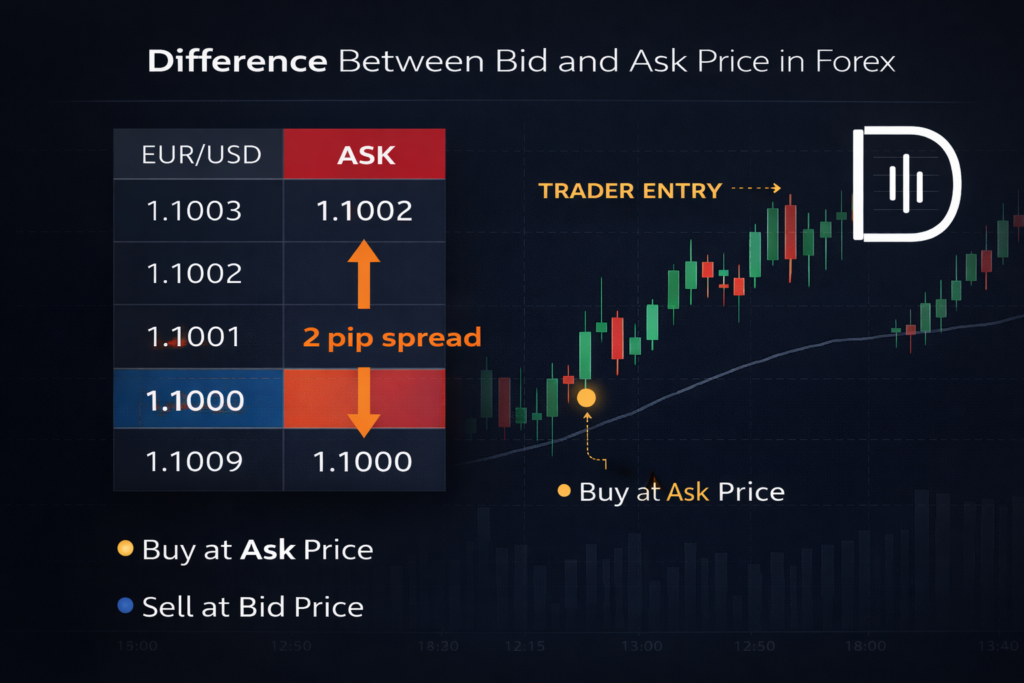
A forex spread is simply the difference between the bid price and the ask price.
When you buy, you pay the ask. When you sell, you receive the bid. The difference between those two prices is the cost of entering the market.
According to the Bank for International Settlements, the foreign exchange market averages more than $7 trillion in daily turnover. Liquidity providers quote slightly different prices across institutions, and the spread compensates brokers and market makers for providing that liquidity.
Educational resources like Investopedia and research from CME Group consistently show that tighter spreads occur when liquidity is highest. That usually happens during the London and New York sessions.
Here is what that means in practical terms for day traders.
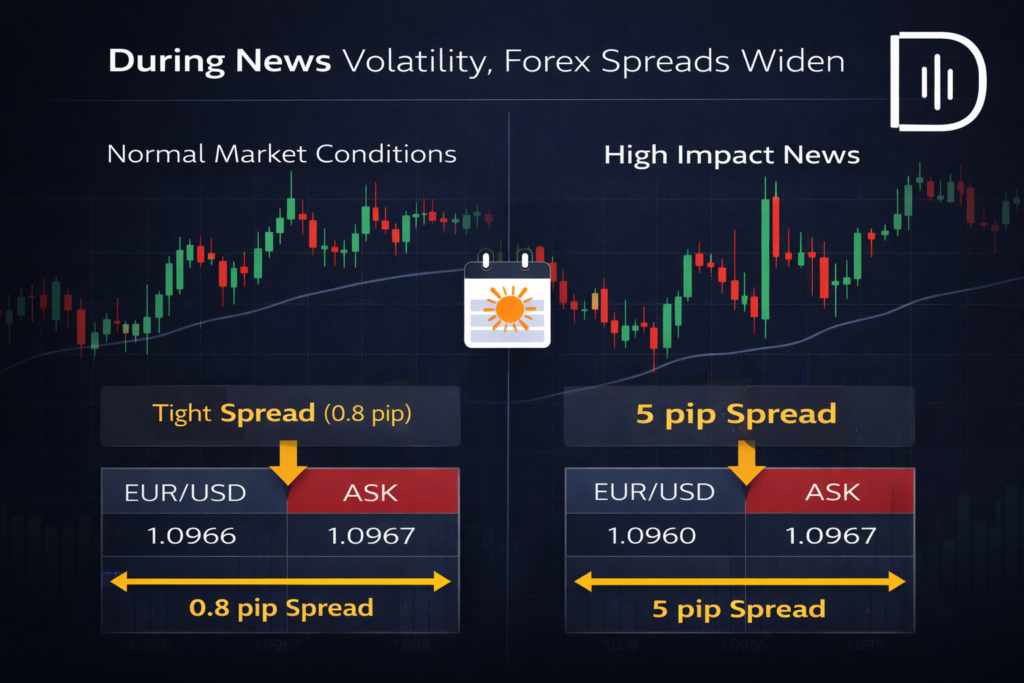
Spreads are not static. They expand and contract depending on:
Market liquidity
News volatility
Broker execution model
Currency pair liquidity
If you are trading EURUSD during the London session, you may see spreads around 0.5 to 1 pip. If you trade the same pair during the Asian session or during high impact news events, spreads can widen significantly.
This variation directly affects strategy performance.
Many beginner traders underestimate this factor when evaluating whether a strategy works.
Forex Spread Explained Through Real Trading Scenarios
Let’s look at what actually happens when you enter a trade.
Assume EURUSD shows:
Bid price: 1.1000
Ask price: 1.1002
The spread is 2 pips.
If you buy, your entry price becomes 1.1002. If you close immediately, you sell at 1.1000. You are instantly down 2 pips.
This may sound small. But for active day traders it compounds quickly.
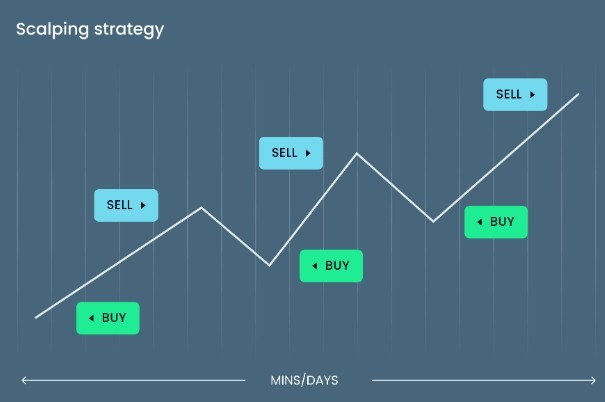
Imagine a scalper targeting 5 pips per trade.
A 2 pip spread consumes 40 percent of the expected move.
This is why spread awareness becomes a strategic decision, not just a cost.
It determines which trading styles are viable.
What Is a Good Spread in Forex for Beginners
Beginner traders often ask what qualifies as a good spread.
The honest answer depends on the pair and the trading style.
For major pairs like EURUSD, GBPUSD, or USDJPY during active sessions, spreads below 1 pip are considered competitive.
For cross pairs like GBPJPY or EURAUD, spreads between 1.5 and 3 pips are common.
Exotic pairs can be significantly wider.
But the deeper insight is this.
The “best” spread is the one that aligns with your strategy’s profit target.
If your average trade aims for 40 pips, a 1 pip spread is irrelevant. If your strategy aims for 6 pips, the same spread becomes a major factor.
This is why spread sensitivity should always be measured relative to average trade expectancy.
In our guide on developing consistent day trading strategies on DayTradersDiary.com, this concept appears frequently. Strategy design must consider execution costs from the beginning.
Ignoring spread costs during strategy development creates unrealistic expectations.
How Spread Affects Profit in Forex Trading
Spread affects profitability in three ways that traders rarely calculate correctly.
First is entry friction.
Every trade begins slightly negative. The spread is the hurdle the trade must overcome before becoming profitable.
Second is compounding cost.
If you take 20 trades per day with an average spread of 1.5 pips, that is 30 pips in transaction cost before slippage or commissions.
Third is stop loss distortion.
Many traders place stops based purely on chart levels. But the spread can trigger stops earlier than expected, especially during volatile periods.
For example, if your stop sits exactly 10 pips below entry but spreads widen by 3 pips during a news spike, the stop may trigger earlier than the chart suggests.
Professional traders always account for this buffer.
A Practical Framework for Managing Spread as a Trader
Understanding spreads is useful. Managing them is where the real edge appears.
Professional traders follow a few simple but powerful routines.
They trade during high liquidity sessions. London and New York overlap generally provides the tightest spreads and most reliable execution.
They align trading style with spread cost. Scalpers demand tighter spreads while swing traders can tolerate wider ones.
They avoid entering positions seconds before high impact news. Liquidity often disappears temporarily, causing spreads to explode.
They monitor broker execution quality. Two brokers can quote similar spreads but deliver very different fills.
These habits dramatically improve execution over time.
Many traders who believe they have strategy problems actually have execution environment problems.
Risk Management and the Hidden Spread Problem
Spread also has an effect on how much you can risk and how big your positions are.
If your trading plan has a 10 pip stop and risks 1 percent per trade,
Your real risk distance is not 10 pips if the spread is 2 pips. When you add in entry friction and execution variability, it’s closer to 12 pips.
A lot of traders get the risk wrong here.
Using a position size calculator removes guesswork and helps you incorporate the true stop distance rather than the theoretical one.
Small execution adjustments like this protect the consistency of your risk model.
Without them, your risk exposure slowly drifts higher than intended.
Tracking Spread Impact in Your Trading Journal
Most traders never track spread impact.
They only track wins and losses.
But spread sensitivity often reveals whether a strategy is structurally viable.
In your trade journal, log the following data points:
Spread at entry
Session traded
Market volatility conditions
Average trade duration
After 50 to 100 trades you may discover patterns.
Perhaps your strategy performs well during the London session but deteriorates during low liquidity periods. The difference might simply be spread expansion.
The Trade Journal Template available on DayTradersDiary.com helps track these execution variables systematically.
Professionals treat execution costs as data, not inconvenience.
Why Capital Efficiency Matters Once You Master Execution
Once you learn to control spread costs, risk, and execution, another reality appears.
Your edge may be solid, but personal capital limits growth.
This is why many disciplined traders explore proprietary trading evaluations.
Firms like The5ers, FTMO, and Topstep allow traders to access larger capital allocations once they demonstrate consistency.
The reason this matters is simple.
Execution works better with more capital.
If your strategy makes an average of 2% a month with controlled spreads and disciplined risk, scaling it up through a structured evaluation program becomes a professional path instead of a gamble.
Before putting their own money on the line, many experienced traders test their strategies in evaluation environments. If your system already accounts for spread, slippage, and risk discipline, exploring a The5ers evaluation account can be a logical next step.
Frequently Asked Questions
What is the forex spread in simple terms?
The forex spread is the difference between the bid price and ask price. It represents the cost of entering a trade.
Why do forex spreads change?
Spreads change based on market liquidity, volatility, time of day, and broker execution model. They are usually tighter during major trading sessions.
How does spread affect profit in forex?
Spread reduces profit potential by creating an initial cost on every trade. The larger the spread relative to the trade target, the harder it becomes to achieve consistent profitability.
Which forex pairs have the lowest spreads?
Major pairs such as EURUSD, USDJPY, and GBPUSD typically have the lowest spreads due to their high liquidity.
Final Thoughts
Spread is one of the most underestimated variables in trading.
It quietly shapes whether a strategy survives real market conditions.
Many traders spend months optimizing indicators while ignoring execution costs that quietly erode performance.
A useful challenge for the next 30 days is simple.
Track the spread on every trade you take.
You may discover that improving execution timing and session selection boosts your performance more than changing any indicator.
If you want to go deeper into execution quality, the next article to read on DayTradersDiary.com is our guide on improving trade execution and slippage control.