
Most day traders obsess over entries.
They spend hours optimizing indicators, refining setups, and studying charts. But when the trade finally moves in their favor, something strange happens.
They close too early.
Or worse, they hold too long and watch profits disappear.
This is one of the most common performance leaks in active trading. The entry might be solid, the risk might be controlled, but the exit logic is vague. Many traders rely on emotion rather than a structured profit target framework.
I have seen traders with profitable strategies slowly lose their edge simply because they never defined how to set profit targets properly.
This guide explains how professional traders approach profit targets. Not with random numbers like “10 pips” or “2 percent per trade,” but with structured logic that is based on how the market works.
If entries get you into trades, profit targets tell you if your edge really grows.
What Research Reveals About Trade Exits
Academic and institutional research consistently shows that exit strategy plays a larger role in profitability than most traders realize.
Research referenced by the CME Group highlights that many professional trading systems rely heavily on predefined exit models rather than discretionary decision making.
Meanwhile, behavioral research published by the CFA Institute shows that traders often exit winning trades too early due to loss aversion bias.
Educational studies cited by Investopedia reinforce the same idea. Traders naturally protect small gains while letting losses grow, which changes what they expect.
This is a practical truth for active day traders.
The market doesn’t often reward exits that are random. Structured exit frameworks lead to steady profits.
Goals for profits should be based on how the market works, not how you feel about them.
The Real Problem With Fixed Profit Targets
A lot of new traders start out with a simple rule.
Get 10 pips. Get 20 points. Take 1R profit.
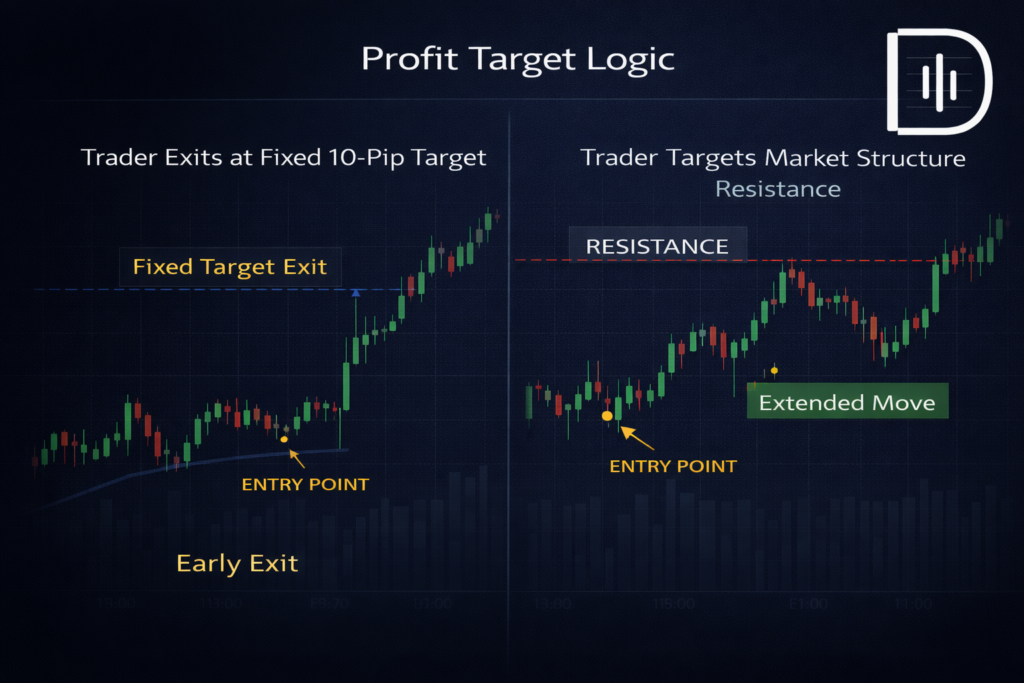
This method seems strict, but markets don’t move in set amounts.
On some days, the market moves 15 pips. It gives 80 on other days. If your target is set, you will often close trades when the market is moving quickly or hold trades when it is moving slowly and the target never comes.
Professional traders think in terms of probability zones rather than fixed numbers.
Instead of asking “How many pips should I target?” they ask “Where does the next liquidity pocket exist?”
Profit targets should be connected to where other traders are likely to exit, where stop orders exist, and where momentum is likely to stall.
If you already understand market structure concepts discussed in our DayTradersDiary.com guide on support and resistance trading, profit target placement becomes much easier.
A Practical Framework for Setting Profit Targets
Setting profit targets in day trading becomes much clearer when broken into a repeatable process.
The first step is identifying the market environment.
Markets that are trending allow for longer targets because the momentum keeps going. In range-bound markets, you need to take profits faster because reversals happen a lot.
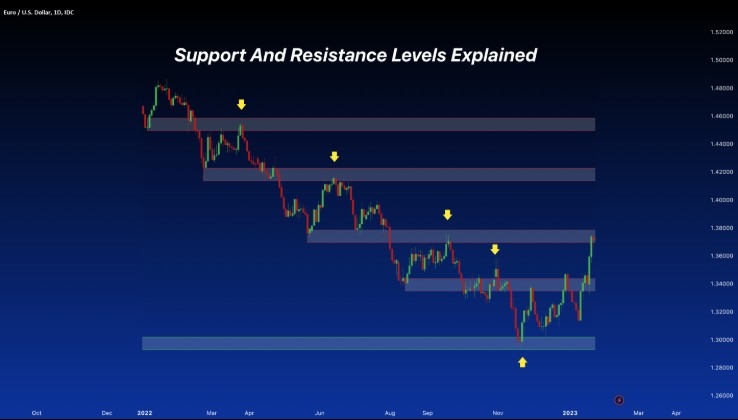
The next step is to find logical exit zones on the map.
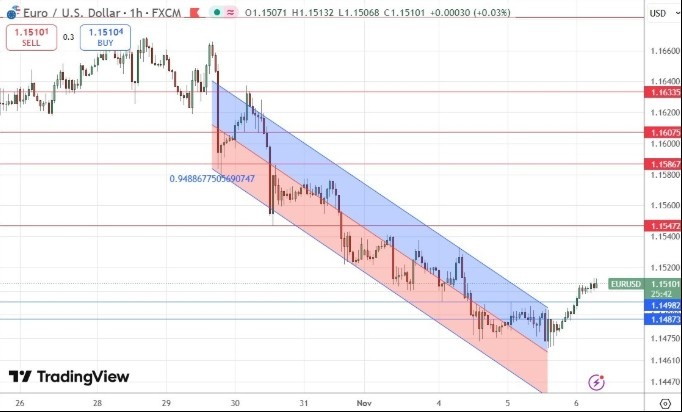
Instead of picking random numbers, look for structural areas like previous highs, previous lows, liquidity clusters, or volume concentration zones. For example, if EURUSD breaks above an intraday consolidation and the next resistance level sits 22 pips higher, that level becomes a natural target.
In this case, the market structure itself defines the exit.
The third step is measuring reward relative to risk.
If your stop loss is 12 pips and the next resistance level offers 24 pips of room, the trade provides a 2R opportunity. That is a reasonable reward profile.
If the next resistance is only 8 pips away, the trade may not justify the risk.
This simple filter dramatically improves trade selection.
Many traders force trades without checking if sufficient profit potential exists.
The Tiered Profit Target Strategy
Professional traders rarely use a single exit.
They often scale out of positions.
A common way to do this is to break the position up into parts.
One part closes at the first logical target, which locks in some profit. Another part is still open to take advantage of longer-term momentum.
This method lowers mental stress.
If the market turns around early, some of the profit is already safe. If momentum keeps going, the bigger move will help the remaining position.
The key idea here is flexibility.
Rigid exits often leave money on the table. Flexible exits allow traders to adapt while still maintaining discipline.
When Profit Targets Fail
Even well designed profit targets can fail when traders ignore market context.
Strong news events can cause price to overshoot targets dramatically. Low liquidity periods can cause price to stall before reaching them.
A lot of traders get angry because they think targets are guarantees. They aren’t sure things. They are areas of chance. When market conditions change, experienced traders also change their targets. If momentum suddenly picks up with a lot of volume, it might be a good idea to move the target up a little bit. If momentum slows down, leaving early may help you keep your profits.
Awareness is always needed for execution.
If you struggle with this balance, reviewing the DayTradersDiary.com article on reading intraday momentum shifts can help refine exit timing.
Profit Targets and Risk Management
Profit targets cannot exist independently from risk.
Every target must be evaluated relative to stop loss placement.
This is where many traders unknowingly distort their risk model.
They choose a profit target first, then adjust stop distance to make the trade look attractive.
That approach reverses the correct order.
Stop placement should come from market structure. Only after defining the stop should the trader evaluate whether the available target offers sufficient reward.
This is where most traders miscalculate risk. Using a position size calculator removes guesswork and helps maintain consistent exposure regardless of stop distance.
If your stop is wider than usual due to volatility, your position size must shrink accordingly.
Profit targets only matter when risk remains stable.
Using Journaling to Improve Profit Target Accuracy
Profit targets improve over time through data.
Many traders never review whether their exits actually capture the majority of available movement.
A useful exercise is comparing your exit price with the maximum favorable excursion of each trade.
Did the market move significantly further after you exited?
Did trades frequently reverse just before reaching your target?
Did momentum conditions differ between winning and missed trades?
These insights help refine future targets.
Tracking this information inside a structured journal makes the process easier. The Trade Journal Template available on DayTradersDiary.com allows traders to track exit efficiency alongside entry quality.
Over time, your journal reveals whether your targets are too conservative, too ambitious, or well calibrated.
Professional trading improvement rarely comes from new indicators. It usually comes from analyzing execution data.
Why Capital Size Matters Once Your Exit Strategy Works
Once a trader develops consistent entries, disciplined risk, and reliable profit targets, another limitation appears.
Capital.
Even a strong strategy producing steady returns can feel slow when applied to a small account.
This is why many serious traders explore evaluation programs offered by proprietary firms.
Companies like The5ers, FTMO, and Topstep allow traders to demonstrate consistency in exchange for access to larger funded accounts.
For traders who already use structured profit targets and disciplined risk models, these programs can be a logical progression.
The5ers in particular focuses on gradual capital scaling and realistic risk rules that align well with professional day trading frameworks.
If your strategy already produces stable R multiples with defined targets, testing it within a The5ers evaluation account can be a practical way to scale performance.
Serious traders eventually realize that skill alone is not enough. Capital efficiency also matters.
Frequently Asked Questions
How do professional traders set profit targets?
Professional traders usually base profit targets on market structure, liquidity zones, and risk to reward ratios rather than fixed pip values.
What is a good risk to reward ratio for day trading?
Many traders aim for at least 1:2 risk to reward, though some high win rate strategies operate successfully with slightly lower ratios.
Should day traders use fixed profit targets?
Fixed targets can work in range bound markets but may limit profits during strong trends. Many traders prefer structure based targets.
Is scaling out of trades better than a single exit?
Scaling out helps reduce emotional pressure and allows traders to capture both small and extended moves when momentum continues.
Final Thoughts
The real purpose of a profit target is not to maximize every trade.
It is to create consistency.
If your exit logic is random, your results will be random even if your entries are good.
For the next month, focus on one improvement.
Before entering a trade, identify the exact structural level where you plan to take profit. Write it down. Treat it as part of the setup.
This single habit forces discipline and clarity.
If you want to deepen your execution framework further, the next article worth reading on DayTradersDiary.com is our guide on mastering risk to reward ratios in day trading.